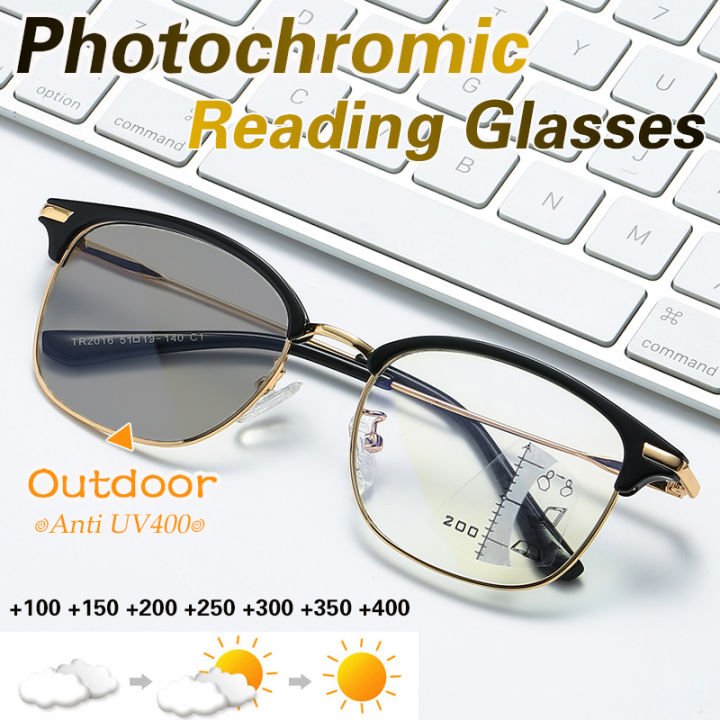
That moment you realize reading a menu requires holding it at arm's length, or squinting at your phone screen has become a daily ritual? Welcome to the club. If you’re over 40 and finding close-up tasks increasingly blurry, you're likely experiencing presbyopia—a natural, age-related change in your eye's lens that makes focusing on nearby objects a challenge. This isn't a sign of overall vision decline, but a specific near-focusing issue. And if you're navigating this new visual landscape, you might be wondering: Who Should Consider Progressive Reading Glasses: Ideal Candidates?
The answer isn't a simple "yes" or "no." It’s about understanding your unique vision needs, lifestyle, and preferences. While traditional reading glasses offer a straightforward solution for close work, progressive lenses provide a sophisticated, all-in-one approach. Let's dive deep into determining if you're the perfect fit for this advanced vision solution.
At a Glance: Progressive Reading Glasses
- What they are: Multifocal lenses that provide seamless vision correction for distance, intermediate (e.g., computer screen), and close-up tasks without visible lines.
- Key benefit: One pair of glasses for virtually all your visual needs, eliminating the need to constantly switch spectacles.
- Ideal for: Individuals with presbyopia who also need distance correction, those with active lifestyles requiring frequent changes in focal length, and anyone prioritizing convenience.
- Considerations: Higher cost, a typical adaptation period (days to weeks), and the critical need for precise professional fitting.
- Alternative: Single-vision reading glasses are best if you only need help with near vision and have perfect distance vision.
Unpacking Presbyopia: The Root of Your Near Vision Woes
Before we explore solutions, it's crucial to grasp what's happening with your eyes. Presbyopia, typically beginning around age 40, is a universal part of aging. It occurs as the natural lens inside your eye stiffens, losing its flexibility to change shape and focus light effectively on close-up objects. It's not a disease, but a perfectly normal physiological change, much like getting gray hair.
For decades, many opted for bifocals or simply carried a separate pair of reading glasses. But technology has evolved, offering more elegant and functional solutions. Progressive lenses are at the forefront of this evolution, designed to bring a wide range of distances into sharp focus, all within a single lens.
The Progressive Lens Advantage: A Seamless World of Vision
Imagine moving your gaze from the road ahead to your car's dashboard, then down to a map or your phone, all without swapping glasses or experiencing an abrupt image jump. That's the core promise of progressive lenses.
Unlike traditional bifocals, which have a distinct line separating distance and near vision segments, progressive lenses offer a smooth, invisible gradient of power. The top portion of the lens is crafted for distance vision, the middle section provides intermediate vision (perfect for computer screens or looking across a room), and the bottom part is for close-up tasks like reading a book or intricate handiwork. This seamless "corridor" of vision allows your eyes to transition naturally between different focal lengths, mimicking how your eyes would focus if presbyopia weren't a factor.
It's this elegant design that has made progressive lenses a game-changer for millions, offering an "all-in-one" solution that integrates naturally into your daily life.
Who Is the Ideal Candidate for Progressive Reading Glasses?
Identifying the "ideal candidate" involves evaluating your daily activities, existing vision correction needs, and how much convenience you prioritize. If any of the following scenarios sound like you, progressive reading glasses might be your perfect match.
1. You Already Wear Glasses for Distance Correction
This is perhaps the most straightforward indicator. If you're already accustomed to wearing glasses to see clearly at a distance (for driving, watching TV, or general day-to-day activities), adding presbyopia to the mix can become quite cumbersome.
- The Dilemma: You're driving, need to see the road, then glance at your phone's GPS for directions, then check the speedometer. With separate distance and reading glasses, you'd be constantly swapping pairs—or worse, trying to peer over your reading glasses for distance, which is both inconvenient and unsafe.
- The Progressive Solution: Progressive lenses allow you to keep one pair on your face all day. You look through the top for driving, shift your gaze slightly down for the dashboard, and dip your head slightly to read your phone. It's an intuitive flow that integrates seamlessly into your existing habits.
2. You Need Vision Correction for All Distances: Near, Intermediate, AND Far
Many people mistakenly believe presbyopia only affects reading. While it’s the most noticeable symptom, our daily lives involve a spectrum of distances.
- The Scenario: You're working at a desk. You need to read documents (near), see your computer screen clearly (intermediate), and perhaps look up at a colleague across the room or a whiteboard (distance). With single-vision reading glasses, your computer screen would be blurry, and anything beyond arm's length would be out of focus.
- The Progressive Advantage: Progressive lenses are designed to handle this exact range. The intermediate zone is specifically tailored for tasks like computer work, making them invaluable for students, office workers, and anyone with a digital-heavy lifestyle. This comprehensive correction means fewer headaches and less eye strain from constantly trying to focus.
3. Your Lifestyle Demands Constant Vision Switching
Think about the activities you engage in daily. Do you frequently transition between close-up tasks and looking across a room or further afield?
- The Multi-Tasker: From cooking (reading recipes, chopping, looking into a pot), to hobbies like gardening (reading seed packets, working on plants, looking at your yard), to shopping (reading labels, navigating aisles, looking for specific items)—many modern activities require dynamic vision.
- Professionals on the Go: Teachers reading notes, looking at students, then glancing at the clock. Mechanics inspecting an engine up close, then grabbing a tool from across the garage. Musicians reading sheet music, seeing their instrument, and connecting with an audience. These professions inherently benefit from the versatility of progressive lenses. You don't want to be fumbling with multiple pairs when focus and precision are key.
4. You Prefer the Convenience and Aesthetics of One Pair of Glasses
Let’s be honest: carrying multiple pairs of glasses can be a hassle. You risk forgetting them, losing them, or constantly searching for the right pair.
- Practicality: With progressive lenses, one pair handles it all. This means less clutter in your bag or on your desk, and no more "where did I put my readers?" moments.
- Aesthetics: Because progressive lenses have no visible lines, they offer a more youthful and modern appearance compared to traditional bifocals. Many individuals appreciate this subtle difference, finding them more aesthetically pleasing and less indicative of "older" vision. This seamless look is a significant draw for many.
Progressive Lenses: What to Consider Before You Dive In
While progressive lenses offer immense benefits, they also come with a few considerations that potential wearers should be aware of. Knowing these upfront can help you set realistic expectations and ensure a smoother transition.
The Investment: Understanding the Cost
Progressive lenses are typically more expensive than single-vision reading glasses or even traditional bifocals. This higher cost reflects the sophisticated technology, precision manufacturing, and extensive customization involved.
- Why the Price Tag? The creation of a progressive lens involves complex optical engineering to achieve that seamless gradient of powers. Each lens is unique, tailored to your specific prescription, frame choice, and how your eyes move.
- Value Over Time: While the initial outlay is higher, many users find the value of convenience, improved functionality, and the "one-pair solution" outweighs the cost, especially over the lifespan of the glasses. It's often seen as an investment in daily comfort and efficiency.
The Adaptation Journey: What to Expect
Perhaps the most talked-about aspect of progressive lenses is the "adaptation period." It's true: there's a learning curve, and it’s completely normal.
- The New Experience: Your brain needs time to learn how to navigate the different focal zones within the lens. Initially, you might notice some peripheral distortion (a "swim" effect at the edges of your vision) or have to consciously adjust your head and eye movements to find the sweet spot for various distances.
- How Long Does It Take? For most people, adaptation takes a few days to a few weeks. Some adjust almost immediately, while others might need up to a month. Patience is key. The good news is that the vast majority of people adapt successfully and go on to enjoy the benefits immensely. If you're pondering whether the adjustment period is worth it, consider reading Are progressive reading glasses worth it? for a deeper dive into the common concerns and ultimate satisfaction experienced by users.
Why a Perfect Fit Isn't Optional
For progressive lenses, precise measurement and professional fitting are absolutely critical. This isn't just about comfort; it's about making the lenses work as intended.
- The Science of Fitting: Your optician will take extremely precise measurements, including your Pupillary Distance (PD)—the distance between the centers of your pupils—and your Fitting Height (how high the progressive corridor needs to be placed within your chosen frame).
- The Impact of Errors: Even a small error of 2-3 millimeters in these measurements can significantly impact your ability to adapt, leading to discomfort, blurred vision, or an inability to find the correct focal zones. A skilled optician ensures the optical center of the lens aligns perfectly with your eyes, maximizing clarity and minimizing distortion. Never skimp on professional fitting when it comes to progressive lenses.
Tips for a Smooth Transition
If you decide progressive lenses are right for you, these tips can help you adapt more quickly:
- Wear Them Consistently: Resist the urge to switch back to old glasses. Wear your new progressive lenses for at least a few hours daily, ideally all day, to allow your brain to adjust.
- Point Your Nose: Instead of just moving your eyes, learn to "point your nose" at what you want to see. For reading, lower your gaze through the bottom part of the lens. For distance, look straight ahead through the top. For intermediate, slightly lower your head.
- Adjust Your Computer Screen: For optimal intermediate vision, position your computer screen so the top is at or slightly below eye level. This allows you to look through the appropriate zone of your progressive lens without excessive neck strain.
- Practice Movement: Start by wearing them in familiar, safe environments. Practice moving your head and eyes naturally. Be mindful when walking up or down stairs, as the peripheral distortion can initially affect depth perception.
- Communicate with Your Optician: If you're struggling after a few weeks, don't hesitate to reach out to your optician. They can check the fit, adjust the frame, or offer further guidance.
Reading Glasses: When Simple Is Best
While progressive lenses are incredibly versatile, they aren't for everyone. For some, the simplicity and immediate utility of traditional reading glasses remain the superior choice.
The Simplicity of Single-Vision Readers
Reading glasses are exactly what they sound like: single-vision magnifying lenses designed specifically for near vision. They provide a fixed magnification power across the entire lens, optimized for objects typically 14-16 inches away.
- How They Work: They simply magnify everything within that close range, making small print clear again. There's no learning curve, no different zones; you put them on, and close objects are magnified.
- Instant Clarity: Many appreciate the immediate "on/off" clarity they offer for reading a book, checking a text message, or threading a needle.
When Reading Glasses Are Your Best Bet
You might be an ideal candidate for traditional readers if:
- You ONLY Struggle with Near Vision: Your distance vision is still perfectly 20/20, and you don't need any correction for looking across the room or driving.
- You Have a Task-Specific Need: You primarily need glasses for specific close-up activities like reading bedtime stories, sewing, or doing intricate craftwork, and you're happy to take them off when you’re done.
- You're Budget-Conscious: Reading glasses, particularly over-the-counter (OTC) versions, are significantly more affordable than progressive lenses.
- You're Sensitive to Peripheral Distortion: If you've tried progressive lenses in the past and found the peripheral distortion too disruptive, or you're generally sensitive to visual changes, simple readers might be more comfortable.
OTC vs. Prescription: Knowing the Difference
Reading glasses come in two main varieties, and understanding their differences is crucial:
- Over-the-Counter (OTC) Readers: These are the readily available, inexpensive glasses you find at drugstores, supermarkets, and online.
- Pros: Convenient, affordable, and readily available in various magnification powers (typically +1.00 to +3.00).
- Cons: They offer a fixed, identical magnification for both eyes and assume your optical centers are aligned perfectly with the lens centers. They do not correct for astigmatism or if you have different prescription strengths in each eye (anisometropia).
- Potential Issues: If your eyes have different needs, or if the optical center isn't aligned with your pupils, OTC readers can lead to eye strain, headaches, or even worsen vision clarity over time. They're best for simple magnification needs in individuals with otherwise healthy, balanced eyes.
- Custom Prescription Readers: Made by an optical lab based on your eye doctor's specific prescription.
- Pros: Tailored to your exact vision needs, correcting for astigmatism and any differences in prescription between your eyes. They ensure the optical center is perfectly aligned with your pupils.
- Cons: More expensive than OTC versions and require an eye exam and waiting period.
- When Needed: Essential if you have astigmatism, different prescriptions in each eye, or simply desire the most precise and comfortable near vision correction possible.
Progressive vs. Reading Glasses: A Side-by-Side Look
To make your decision clearer, here's a direct comparison of the two primary solutions for presbyopia:
| Feature | Progressive Glasses | Reading Glasses |
|---|---|---|
| Functionality | Multifocal: Corrects vision for near, intermediate, and far distances with seamless transitions. | Single-Vision: Corrects only near vision with fixed magnification. |
| Versatility | Highly versatile "all-in-one" solution for most daily activities. | Task-specific: Best for dedicated close-up work; blurs distance/intermediate vision. |
| Convenience | One pair for almost all needs; no constant switching. | Requires constant on-and-off use or carrying multiple pairs. |
| Cost | Generally higher due to advanced technology and customization. | More affordable, especially over-the-counter versions. |
| Adaptation | Requires an adaptation period (days to weeks) to adjust to different focal zones. | No adjustment period needed; immediate use. |
| Aesthetics | No visible lines, offering a more modern, seamless look. | No visible lines (except traditional bifocals, which are distinct from single-vision readers). |
| Best For | Individuals needing correction for all distances, active lifestyles, preference for one pair. | People with perfect distance vision, budget-conscious, task-specific needs. |
Caring for Your Vision Aids: Longevity and Comfort
Regardless of whether you choose progressive or reading glasses, proper care is essential to maintain their clarity and extend their lifespan.
- Cleaning: Always use a microfiber cloth specifically designed for lenses. Avoid paper towels, tissues, or shirt sleeves, as these can scratch the lens surface. For stubborn smudges, use a dedicated lens cleaning spray or mild soap and water, then gently pat dry.
- Storage: When not wearing your glasses, store them in a protective hard case. This prevents scratches, bends, and accidental damage.
- Progressive-Specific Care: For progressive lenses, ensuring the correct fit is paramount. A frame that slides down your nose or sits unevenly can shift the progressive corridor, leading to discomfort and blurred vision. Regularly have your optician check and adjust the fit.
Your Next Steps Towards Clear Vision
Deciding between progressive and reading glasses is a personal journey, but you don't have to navigate it alone. The most crucial first step is a comprehensive eye examination by a qualified eye care professional.
During your exam, your optometrist or ophthalmologist will:
- Determine Your Precise Prescription: This includes measurements for both near and distance vision, as well as checking for astigmatism or differences between your eyes.
- Assess Your Ocular Health: They'll ensure your eyes are healthy and rule out any underlying conditions.
- Discuss Your Lifestyle: Be prepared to talk about your daily activities, hobbies, work environment, and how you typically use your eyes. This information is vital for recommending the most suitable lens type. Do you spend hours on a computer? Do you drive a lot at night? Do you enjoy intricate crafts?
- Provide a Professional Recommendation: Based on your prescription, eye health, lifestyle, and budget, your eye care professional can offer tailored advice and help you make an informed decision.
Ultimately, whether you choose the seamless world of progressive lenses or the focused simplicity of reading glasses, the goal is the same: to restore clear, comfortable vision that allows you to engage with the world around you fully and without strain. Don't let presbyopia hold you back—there's a perfect vision solution waiting for you.