As you pass the big 4-0, you might notice your arms aren't quite long enough anymore for reading menus or seeing your phone clearly. Suddenly, the world looks a little softer, a little fuzzier up close. Welcome to presbyopia, the entirely normal, age-related stiffening of your eye's natural lens. It's a universal rite of passage, and it brings with it a pivotal question: how do you regain that sharp vision? The answer often lies in understanding the distinct worlds of Progressive vs. Bifocal vs. Single-Vision Readers: A Comparison.
Navigating the options—single vision, bifocal, and progressive lenses—can feel like learning a new language. But don't worry, you're not alone, and choosing the right solution makes all the difference in your daily comfort and clarity.
At a Glance: Your Lens Options
- Single Vision Lenses: One clear focus. Great if you only need help seeing far or near, not both. Think dedicated driving glasses or dedicated reading glasses. Simple, versatile, and affordable.
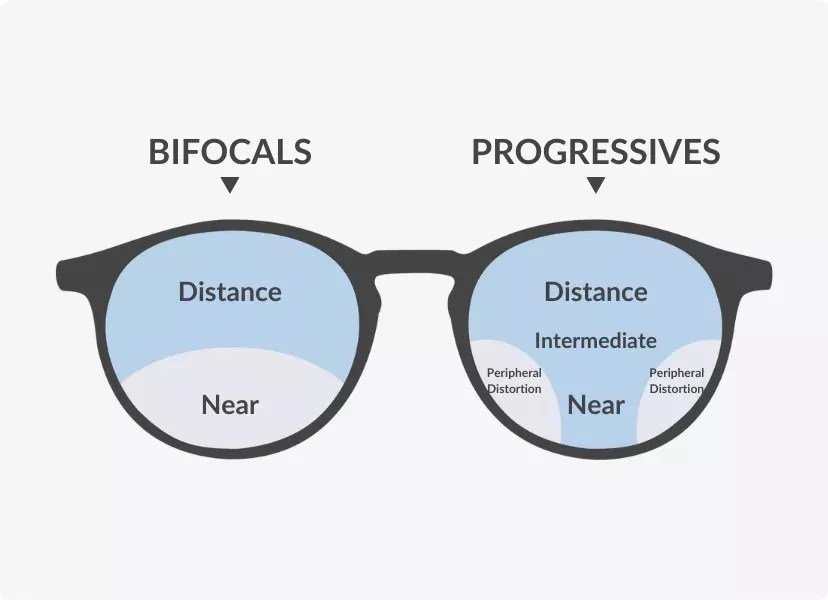
- Bifocal Lenses: Two distinct zones, separated by a visible line. Upper part for distance, lower part for near. A practical step up when you need both far and near correction, eliminating the need to constantly swap glasses. Lacks intermediate vision.
- Progressive Lenses: The seamless solution. No visible lines, a gradual transition through distance, intermediate (computer/dashboard), and near vision. Mimics natural focusing, offering clear vision at all distances for a fluid, natural experience. Requires careful fitting and an adjustment period.
The Shifting Sands of Sight: When Your Eyes Start to Change
Our eyes are incredible organs, designed to focus effortlessly on objects near and far. But as we age, specifically after 40, the natural lens inside your eye begins to lose its flexibility. This loss of elasticity is called presbyopia, and it makes it increasingly difficult to focus on close-up tasks. Suddenly, that tiny text on a medicine bottle or the fine print in a book becomes a frustrating blur.
This isn't a disease; it's a natural part of life. And while frustrating, it's also easily corrected with the right lenses. The key is understanding that "right" solution isn't one-size-fits-all. Your lifestyle, visual demands, and personal preferences will dictate whether a simple single-vision lens, a traditional bifocal, or an advanced progressive lens is your perfect match.
Single Vision Lenses: Clear Focus on One Horizon
Think of single-vision lenses as specialists. They are crafted with a single optical power across the entire lens surface. This means they correct one specific vision challenge, providing crystal-clear focus for either distance, intermediate, or near vision.
Who are they for?
- Younger individuals: If you're nearsighted (myopic) and need help seeing things far away, or farsighted (hyperopic) and struggle with objects up close, but your natural lens still handles the other distances just fine.
- Specific task users: Even with presbyopia, you might choose single-vision lenses if you only need dedicated glasses for one activity. For example, a pair solely for reading, or another exclusively for driving.
The Upside: - Simplicity and wide field of view: No lines, no power transitions. What you see is consistently clear at its intended distance.
- Affordability: Generally the most budget-friendly option.
- Customization: Easily enhanced with coatings like blue light protection, anti-scratch treatments, and UV filters.
The Downside:
If you have presbyopia and need help seeing both far away and up close, single-vision lenses mean carrying multiple pairs of glasses. You'll be constantly swapping them out, which can be inconvenient and easy to misplace.
Bifocal Lenses: Two Powers, One Lens, A Visible Line
Enter the world of multifocal lenses, designed to tackle more than one vision need in a single pair of glasses. Bifocal lenses are the original multifocal solution, offering distinct correction for both distance and near vision.
How They Work:
Imagine a window divided in two. That's essentially a bifocal lens. The upper portion of the lens holds your prescription for distance vision, perfect for driving or watching TV. The lower, smaller segment, often shaped like a D or a half-moon, contains your near vision prescription, ideal for reading a book or looking at your phone. These two distinct optical powers are separated by a noticeable, visible line.
Who are they for?
Bifocals are a classic choice for individuals with presbyopia who require both distance and near correction. They offer a practical solution if you don't want the hassle of constantly switching between two pairs of glasses. They're especially convenient if you primarily need to switch between far-off objects and very close-up tasks.
The Convenience Factor:
- No more swapping: You get your distance and reading correction all in one frame.
- Cost-effective: Often cheaper than purchasing separate, dedicated pairs of glasses for distance and near.
The Catch (and the Line): - Missing Middle Ground: This is the most significant limitation. Bifocals only correct far distance and close reading. They completely lack a correction for intermediate vision – that arm's-length distance you use for computer screens, cooking, or viewing your car's dashboard. This means your computer screen might still be a little fuzzy.
- The Visible Line: While some find it reassuring, many people dislike the aesthetic of the visible line. More importantly, this line causes what's known as "image jump," where your vision shifts abruptly as your eyes cross the boundary between the two powers. This can be disorienting and take some getting used to.
- Head Movement: You'll typically need to tilt your head to look through the appropriate section of the lens, rather than just shifting your eyes.
Progressive Lenses: The Seamless Vision Experience
Often called "no-line bifocals," progressive lenses are the most advanced and widely preferred multifocal option today. They offer a sophisticated solution that closely mimics natural vision by providing a seamless transition between multiple optical powers.
The Magic Behind the Lens:
Unlike bifocals, progressives have no visible lines. Instead, the lens gradually changes power from top to bottom, creating a "corridor" or "channel" of clear vision:
- Top Portion: This is your clear zone for distance vision, perfect for driving, watching TV, or seeing objects beyond six feet.
- Middle Portion: This is the crucial intermediate zone, often referred to as the "progression corridor." It's designed for computer work, viewing your car's dashboard, or interacting with anything at arm's length. This is where progressives truly shine compared to bifocals.
- Bottom Portion: This provides the strongest magnification for close-up reading, whether it's a book, smartphone, or tablet.
Who Absolutely Needs Them?
Progressive lenses are usually needed by anyone over 40 due to presbyopia. If you experience any of these signs, it's worth a conversation with your eye doctor: - Blurred vision with prolonged reading or screen use.
- General eye fatigue or strain.
- Needing to constantly enlarge text or hold reading materials farther away.
- Frequently swapping between multiple pairs of glasses for different tasks.
Why People Love Them: - Natural Vision: The gradual transition allows your eyes to focus smoothly at various distances, much like your natural lens did before presbyopia set in.
- Aesthetics: Without visible lines, progressive lenses look just like single-vision glasses. No one needs to know you're wearing multifocals.
- Reduced Eye Strain: The continuous range of focus helps prevent the eye strain that can come from constantly trying to adjust or from the abrupt shifts of bifocals.
- Ultimate Convenience: One pair of glasses for virtually all your visual needs, from driving to working on a computer to reading a book. Many people find themselves asking, Are progressive glasses worth it?—and for the majority, the answer is a resounding yes.
The Adjustment Period: What to Expect
While progressives offer incredible benefits, they do come with an adjustment period, especially if you're new to multifocal lenses. This is where the "corridor" of clear vision comes into play. To the sides of this corridor, there can be some mild peripheral distortion or a "swim effect." - Easier Adjustment Earlier: It's often easier to adapt to progressive lenses when you're in the early stages of presbyopia (e.g., in your 40s) because the power differences in the lens are less dramatic.
- Initial Feelings: You might feel a slight "swim" or sway when you first wear them, especially when turning your head. Some people report a subtle blur at the edges of their vision.
- Tips for Success:
- Wear them constantly: Don't swap back to old glasses; your brain needs consistent input to adapt.
- "Point your nose": Instead of just moving your eyes, subtly turn your head to point your nose at what you want to see, especially for near tasks.
- Be patient: Most people adjust within a few days to a couple of weeks. If you're still struggling after that, speak with your optician.
The Critical Importance of Proper Fitting:
This cannot be overstated: Progressive lenses require precise in-person measurement by a skilled optician. Unlike single-vision lenses, where fitting is straightforward, progressive lenses need to be perfectly aligned with your pupils and how you naturally hold your head and read. - Online Orders Risk Distortion: Ordering progressive glasses online without professional measurements can lead to misaligned or improperly positioned lenses. This is a common cause of blurred vision, distortion, and significant difficulty adapting.
- Optician Expertise: A good optician will take numerous measurements, including pupillary distance, seg height (the vertical measurement from the bottom of your frame to the center of your pupil), pantoscopic tilt (the angle of the frame), and even how the frame wraps around your face. This ensures the optical "corridor" of the progressive lens is perfectly aligned with your unique vision.
Beyond the Basics: Enhancing Your Lens Choice
No matter which lens type you choose, modern eyewear offers a host of features to optimize your vision and protect your eyes.
- Anti-Reflective (AR) Coatings: These nearly invisible layers reduce glare from lights, computer screens, and reflections, making your vision clearer and your eyes more visible to others.
- Blue Light Protection: With screens dominating our lives, coatings that filter out harmful blue light can reduce eye strain and potentially improve sleep.
- UV Protection: Essential for protecting your eyes from the sun's damaging ultraviolet rays, which can contribute to cataracts and other eye conditions.
- Scratch-Resistant Coatings: While no lens is truly scratch-proof, these coatings significantly enhance durability.
- Lens Materials: Lenses come in various materials that can make them thinner, lighter, and more impact-resistant, especially beneficial for stronger prescriptions or larger frames.
- Frame Choice: Your frame isn't just a style statement; it affects lens options. Some complex prescriptions or progressive lenses may require specific frame shapes or sizes for optimal performance.
Making Your Choice: Lifestyle, Needs, and Personal Comfort
Deciding between single-vision, bifocal, and progressive lenses isn't about finding a universally "best" option, but rather the best solution for you. Here’s how to weigh your options:
1. Your Daily Routine & Visual Demands
- Primarily reading or driving? If your needs are distinctly separate, and you don't mind swapping glasses, single-vision pairs for each task might work.
- Driving, reading, AND computer work? This is the sweet spot for progressive lenses. They handle the full spectrum of distances without compromise.
- Driving and reading, but minimal computer use? Bifocals could be a simpler, more budget-friendly option if you don't mind the visible line and the lack of intermediate vision.
2. Budget Considerations
- Single-vision lenses are generally the most affordable.
- Bifocal lenses are typically more expensive than single-vision but less than progressives.
- Progressive lenses are the most advanced and, consequently, the most expensive. However, many view the investment as worthwhile for the superior vision and convenience. Don't forget to factor in your vision insurance benefits, which can significantly offset costs.
3. Aesthetics & Comfort
- Do visible lines bother you? If you prefer a seamless look, progressives are the clear winner.
- Are you prone to motion sickness or sensitive to visual shifts? While most people adapt, the "image jump" of bifocals or the initial peripheral distortion of progressives can be a consideration. Starting with progressives in your 40s when the power change is less drastic can ease adaptation.
4. Willingness to Adapt
- Patient and open to new visual experiences? Progressives require a learning curve, but most people find the benefits far outweigh the initial adjustment.
- Prefer instant, straightforward vision? If you need immediate, unchanging clarity at a single distance, single-vision lenses might be your preference.
5. Alternative Treatments: A Quick Look
While lenses are the primary solution, you might hear about other options for presbyopia. For instance, prescription eye drops designed to temporarily constrict your pupils (like pilocarpine) can improve near vision. However, these carry potential risks such as retinal detachment, and common side effects include small pupils, irritation, redness, and burning. Also, insurance coverage for these newer treatments can be inconsistent. For most, glasses remain the safest, most effective, and most widely covered solution.
Debunking Common Myths & Answering FAQs
Let's clear up some common misunderstandings.
"Progressives are too hard to get used to."
- Reality: While there's an adjustment period (usually a few days to two weeks), the vast majority of people successfully adapt. Starting early in your presbyopia journey (e.g., in your 40s) often makes the transition even smoother. Proper fitting by an expert optician is the single most critical factor for success.
"Bifocals are outdated." - Reality: Not at all! Bifocals still serve a valuable purpose for many individuals who need both distance and near correction, appreciate their clear power zones, and aren't bothered by the visible line or the lack of intermediate vision. They remain a cost-effective and reliable option.
"Can't I just get cheap reading glasses from the drug store?" - Reality: For simple, occasional reading needs, over-the-counter readers can be a temporary fix. However, they are not customized to your unique prescription, pupillary distance, or astigmatism. For anything beyond very casual use, or if you notice eye strain, a proper eye exam and custom single-vision reading glasses are far superior. They certainly won't help with distance vision or a seamless transition between distances.
"My prescription isn't strong enough for progressives yet." - Reality: The best time to start wearing progressive lenses is actually when your presbyopia is mild. The smaller the difference between your distance and reading prescription, the easier it typically is to adapt to the gradual change in a progressive lens. Don't wait until your vision challenges are severe.
Your Clear Path Forward: Making the Right Decision
Choosing the right lenses is a deeply personal decision, but it's one you don't have to make alone. Your vision is unique, and so should be your solution. The most crucial first step is always a comprehensive eye exam with a trusted optometrist.
During your exam, openly discuss your lifestyle: how much time you spend driving, on a computer, reading, or engaged in hobbies. Explain any visual discomfort or challenges you're experiencing. Your optometrist can accurately assess your needs and recommend the ideal lens type for you.
If you decide on progressive lenses, remember the cardinal rule: insist on an in-person visit to a reputable optical shop with a skilled optician for precise measurements and fitting. This professional expertise is the cornerstone of comfortable, clear vision with progressive lenses and will save you from potential frustration and discomfort down the line.
Ultimately, whether you opt for the focused clarity of single vision, the dual convenience of bifocals, or the seamless world of progressives, the goal is the same: to restore your clear vision and enhance your quality of life. See clearly, live fully.