Ah, progressive lenses. For many, they’re a marvel of modern optics, offering a seamless visual experience from your morning coffee to the distant horizon. Yet, beneath their sleek, line-free surface lies a complex truth: the journey to clear, comfortable vision with progressives often involves significant Challenges and Adaptation: The Downsides of Progressive Lenses. It’s not always the smooth sailing their marketing brochures promise, and understanding these potential hurdles before you commit is crucial.
If you’re considering progressives, or already wearing them and struggling, you’re in good company. This guide will walk you through the very real drawbacks, helping you set realistic expectations and navigate the adaptation period with confidence.
At a Glance: What to Know About Progressive Lens Downsides
- Extended Adaptation: Expect days to weeks of adjustment, potentially including dizziness and headaches.
- Peripheral Blur: The edges of your vision might be distorted, requiring head movement.
- Frame Limitations: Not all frames work; smaller or highly curved styles can reduce usable lens area.
- Higher Cost: Significantly more expensive than single-vision or bifocal lenses, with less insurance coverage often.
- Initial Discomfort: Some users experience motion sickness or eye strain during the adjustment phase.
- Not for Everyone: Certain activities or professions might find progressives less ideal.
Understanding the Optical Compromise: How Progressives Work (and Why They Present Challenges)
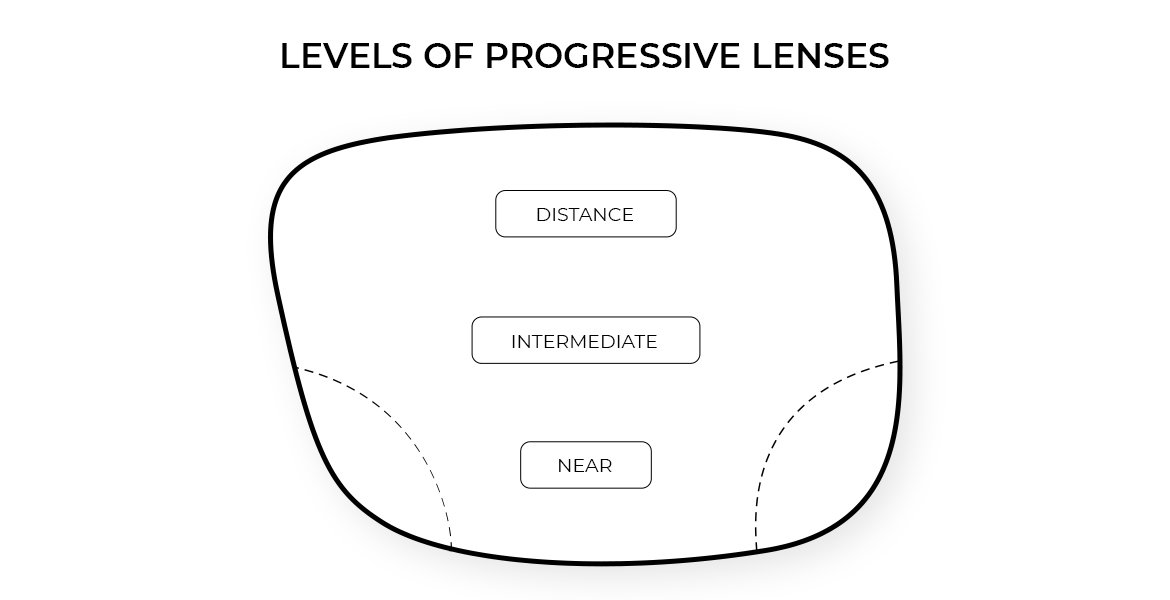
Before diving into the downsides, a quick refresher on the brilliance – and inherent compromises – of progressive lenses. Designed primarily for presbyopia, the common age-related focusing challenge, these lenses are engineering marvels. They achieve a continuous gradient of vision correction:
- Top: For crisp distance vision (driving, watching TV).
- Middle: A "corridor" for intermediate tasks (computer screens, reading music, cooking).
- Bottom: For up-close reading and intricate detail work.
This seamless transition, without the tell-tale line of bifocals, is their primary appeal. You get one pair of glasses for all your visual needs, appearing just like regular single-vision lenses. They can even correct other refractive errors like nearsightedness or astigmatism simultaneously.
However, creating this gradient of power within a single lens isn't magic; it's a carefully calculated optical design that introduces its own set of trade-offs. It's these compromises that give rise to the common difficulties new wearers experience.
The Long Road to Clarity: Unpacking the Adaptation Period
Perhaps the most frequently cited downside of progressive lenses is the adaptation period. Unlike single-vision glasses, which typically feel natural almost immediately, progressives demand a learning curve from your brain and eyes. This isn't just a few hours; it can stretch from several days to a few weeks, sometimes even longer for some individuals.
During this time, it's common to experience a range of unsettling sensations:
The Dizziness and Headaches Rollercoaster
Many new progressive wearers report initial bouts of dizziness or lightheadedness. This happens because your brain is trying to reconcile the multiple power zones with your natural eye movements. When you glance around, your eyes might inadvertently sweep through different magnifications, sending conflicting signals to your brain. This can trigger headaches, a feeling of disorientation, or even mild nausea, akin to motion sickness.
It’s your brain working overtime, trying to map out this new visual landscape. For those with pre-existing balance issues or a history of motion sickness, this initial phase can be particularly challenging.
Peripheral Distortion: The "Swim" Effect
One of the most characteristic complaints about progressive lenses is the peripheral distortion, often described as a "swim" or "sway" effect. Due to the complex curvature required to create the power gradient, the edges of progressive lenses inevitably contain areas of blur, distortion, or unwanted magnification.
Imagine looking through a funhouse mirror at the edges. Objects might appear to curve, tilt, or shimmer as you move your head or eyes. This is most noticeable when looking down stairs, walking on uneven surfaces, or trying to quickly scan a large area with your eyes alone. Your brain needs to learn to actively ignore these distorted zones and instead rely on the clearer central "corridor" of the lens. This often means learning to move your head more, rather than just your eyes, a significant behavioral change for many.
Financial Considerations: Why Progressives Cost More
Let's not sugarcoat it: progressive lenses are a significant investment. They are almost always more expensive than single-vision lenses and even traditional bifocals.
The Premium Price Tag
Standard progressive lenses typically range from $150 to $300, but premium designs, which offer wider fields of clear vision and less peripheral distortion, can easily cost $400 or more per pair. And that's just for the lenses. Add in advanced coatings (anti-reflective, scratch-resistant, UV protection, blue light filtering) and designer frames, and the total bill can quickly climb into the hundreds, even over a thousand dollars.
Why the higher cost? It boils down to the intricate manufacturing process, the specialized optical design, and the precision required for fitting. Creating that seamless power transition demands advanced technology and expertise.
Insurance and Budgeting
While vision insurance can help offset some of the cost, it rarely covers the full amount, especially for premium options. Many plans may treat progressives as an "upgrade" over bifocals, requiring you to pay the difference out-of-pocket. Using flexible spending accounts (FSAs) or health savings accounts (HSAs) can help mitigate the financial sting by using pre-tax dollars. However, for many, the cost remains a notable barrier. If you're weighing the pros and cons, considering whether progressive lenses are worth it often comes down to balancing this investment against the perceived benefits.
Not All Frames Are Created Equal: Limited Options
The sophisticated design of progressive lenses also places certain constraints on your choice of eyeglass frames. This can be a surprising downside for those who value fashion or have specific frame preferences.
The Need for Depth
To accommodate all three vision zones (distance, intermediate, and near) effectively, progressive lenses require a certain vertical depth. This means that very small or shallow frames, trendy rimless designs, or highly curved sports frames may simply not be suitable. Trying to fit all the necessary optical corridors into a limited lens area can result in:
- Truncated Zones: The reading or intermediate zones might become too small to be practical.
- Compromised Optics: The design may have to be altered, increasing distortion or narrowing the clear vision areas.
Your optician will guide you on appropriate frame sizes, but it’s a good idea to approach frame selection with an open mind, understanding that some styles might be off-limits.
Beyond Initial Adaptation: Specific Challenges and Lifestyle Considerations
While many adapt to the initial discomforts, some challenges with progressive lenses persist or become apparent in specific situations.
Digital Eye Strain and Computer Work
For those who spend hours in front of a computer, the intermediate zone of a standard progressive lens might feel too narrow or too low, forcing uncomfortable head and neck postures. You might find yourself craning your neck back to look through the intermediate zone, or hunching forward to use the reading zone for your screen. This can lead to significant digital eye strain, neck pain, and fatigue.
Fortunately, lens manufacturers have developed specialized "computer progressives" or "office lenses" that feature a wider, more accessible intermediate zone. However, these often come with a trade-off: a reduced or absent distance vision zone, meaning they are primarily for indoor use and not a true "all-in-one" solution. This means you might need another pair of glasses specifically for your computer work, somewhat undermining the "one pair for everything" promise.
Activities Requiring Wide Peripheral Vision
Progressive lenses are generally not ideal for activities that demand wide, unobstructed peripheral vision or rapid eye movements. Think about sports like tennis, golf, or basketball, where you need to track fast-moving objects across your entire field of view. The peripheral distortion inherent in progressives can hinder performance and even pose safety risks by making it difficult to judge distances or track objects accurately at the edges of your vision.
Similarly, professions like construction work, piloting, or driving heavy machinery, where constant awareness of your surroundings is paramount, might find the limitations of progressives problematic. While they work well for driving a car on a highway (using the distance zone), complex maneuvers or situations requiring quick, sweeping glances can be tricky.
Progressive vs. Bifocal vs. Single-Vision: A Hard Look at the Trade-offs
Understanding the downsides of progressives becomes clearer when you compare them to the alternatives. Each type of lens has its own set of compromises.
| Feature | Single-Vision Lenses | Bifocal Lenses | Progressive Lenses |
|---|---|---|---|
| Vision Zones | One power (distance OR near) | Two distinct powers (distance & near) | Continuous gradient (distance, intermediate, near) |
| Adaptation | Easy, often immediate | Minimal for two zones, but adjustment to "image jump" | Can be days to weeks; requires significant brain retraining |
| Aesthetics | Line-free, like "normal" glasses | Visible line across the lens | Line-free, like "normal" glasses |
| Intermediate Vision | None (requires switching glasses) | None (requires switching glasses) | Clear, seamless transition |
| Peripheral Vision | Clear across the lens | Clear across respective zones, with minor disruption at line | Potential distortion/blur at edges |
| Cost | Most affordable | Moderately affordable | Most expensive |
| Frame Options | Widest range | Good range, but line placement can be a factor | More limited; requires vertical depth |
| Key Downside | Need multiple pairs for different distances | Visible line; "image jump"; no intermediate zone | Long adaptation; peripheral distortion; higher cost |
| The comparison highlights that the primary "downside" of single-vision lenses is inconvenience (needing multiple pairs). Bifocals trade aesthetics and intermediate vision for two clear, distinct zones. Progressives attempt to solve all these, but at the cost of optical distortion in the periphery and a demanding adaptation period. |
Overcoming the Hurdles: Adapting Successfully to Progressives
If, after weighing the downsides, you decide progressives are still the right choice for you, there are concrete steps you can take to make the adaptation process smoother and more successful.
1. The Professional Fitting is Paramount
This cannot be stressed enough: the success of your progressive lenses hinges on a precise, professional fitting. Your optician must accurately measure:
- Pupillary Distance (PD): The distance between the centers of your pupils.
- Optical Center Height: Where your pupils align vertically within the lens.
- Pantoscopic Tilt: The angle of your frames relative to your face.
- Vertex Distance: The distance between the lens and your eye.
Even slight inaccuracies in these measurements can misalign the progressive zones, leading to persistent discomfort, distortion, and a failed adaptation. Don't skimp on this step; a skilled optician is your most valuable ally.
2. Wear Them Consistently from Day One
Your brain is a remarkable adaptive machine, but it needs consistent input to learn. Resist the urge to switch back to your old glasses when you feel frustrated. Wear your new progressives all day, every day, from the moment you get them. The more exposure your brain has to the new visual landscape, the faster it will learn to interpret the different zones and filter out the peripheral distortion.
3. Move Your Head, Not Just Your Eyes
This is one of the most critical behavioral changes for progressive lens wearers. Instead of just darting your eyes left and right, learn to turn your head slightly to look through the appropriate, clear zone of the lens.
- Looking far away: Keep your head straight, look through the top.
- Looking at your computer: Slightly lift your chin and look through the intermediate zone.
- Reading a book: Tilt your head down slightly and look through the bottom reading zone.
This head movement helps you avoid the distorted peripheral areas and ensures you’re always using the clearest part of the lens for the task at hand.
4. Practice in Safe, Familiar Environments
Don't jump straight into driving or navigating a crowded mall on your first day. Start at home, where you're comfortable and the environment is predictable.
- Walk around your house: Get used to walking, especially up and down stairs, consciously moving your head.
- Read a book, use your computer: Practice finding the sweet spots for these common tasks.
- Avoid driving initially: Wait until you feel completely comfortable with the "swim" effect and can confidently transition between distance and dashboard views.
5. Communicate with Your Eye-Care Professional
If, after a few weeks (typically 2-4), you are still experiencing significant headaches, dizziness, persistent blurred vision, or feel you're simply not adapting, do not suffer in silence. Contact your optician or optometrist. They can:
- Re-check the fitting: Ensure all measurements are correct.
- Verify the prescription: Confirm there are no errors in the lens power.
- Suggest adjustments: Sometimes minor frame adjustments can make a big difference.
- Discuss alternatives: If progressives truly aren't working, they can explore other options like bifocals or task-specific glasses.
Many reputable opticians offer an adaptation guarantee, allowing for exchanges or adjustments within a certain timeframe if you simply cannot adapt.
Caring for Your Investment
Given their cost and complexity, proper care for your progressive lenses is essential to protect your investment and ensure their longevity.
- Clean Gently: Use a clean microfiber cloth and a specially formulated lens cleaner. Avoid paper towels or harsh chemicals, which can scratch coatings.
- Store Safely: Always keep your glasses in a hard protective case when not wearing them to prevent accidental damage.
- Avoid Extreme Heat: Never leave your progressive lenses in a hot car or expose them to direct, intense heat. This can warp frames and damage lens coatings.
- Regular Check-ups: Annual eye exams are crucial to ensure your prescription is current and your lenses are still meeting your vision needs.
Making an Informed Decision
Progressive lenses offer undeniable convenience and a natural aesthetic, eliminating the need to juggle multiple pairs of glasses for different distances. For many, they are a life-changing solution that seamlessly integrates into their daily routine. However, it's equally important to acknowledge the very real Challenges and Adaptation: The Downsides of Progressive Lenses.
From the initial period of dizziness and peripheral distortion to the higher cost and specific lifestyle limitations, progressives are not a one-size-fits-all solution. Success largely hinges on a precise professional fitting, your willingness to commit to the adaptation period, and realistic expectations about what these advanced lenses can and cannot do.
Before making your decision, have a candid conversation with your eye-care professional. Discuss your daily activities, your vision needs, your budget, and any concerns you have. A personalized consultation is the best way to determine if the benefits of progressive lenses will outweigh their notable downsides for you.