Remember that moment when you first held a menu at arm's length, or squinted at your phone, suddenly realizing your eyes weren't quite what they used to be? You’re not alone. For millions of us, usually starting around age 40, focusing on nearby objects becomes a frustrating daily struggle known as presbyopia. While traditional reading glasses offer a quick fix for close-up tasks, they often leave us juggling multiple pairs or constantly pulling them on and off. But what if there was a better way? This comprehensive look into the benefits of progressive reading glasses will reveal how these innovative lenses can transform your daily vision, offering a seamless, natural, and utterly convenient solution to the challenges of aging eyes.
At a Glance: Why Progressive Lenses Might Be Your Next Best Investment
- One Pair Does It All: Enjoy clear vision at all distances – near, intermediate, and far – without switching glasses.
- Invisible Upgrade: No visible lines, offering a more modern and stylish look than traditional bifocals.
- Effortless Transitions: Smoothly shift focus between tasks, from reading to computer work to driving, without "image jump."
- Reduced Eye Strain: Your eyes work less hard adapting, leading to less fatigue throughout the day.
- Enhanced Daily Convenience: Simplify your life by eliminating the constant hunt for the right pair of glasses.
- Natural Vision Experience: Mimics youthful vision, allowing for continuous, comfortable visual flow.
Understanding the Fading Focus: The Presbyopia Problem
Before we dive into the solution, let's quickly touch on the root cause. Presbyopia is a natural, age-related process where the lens inside your eye stiffens, losing its flexibility to change shape and focus on objects at different distances. Think of it like a camera lens that just won't zoom anymore – stuck mostly on a single focal length.
For years, the go-to fixes were basic reading glasses (great for close-up, useless for far away), or bifocals and trifocals. While functional, bifocals and trifocals come with a distinct challenge: visible lines marking abrupt shifts in prescription. This isn't just an aesthetic concern; these lines create an "image jump," where your vision literally leaps as your eye crosses the boundary, often causing disorientation or a feeling of seasickness. It’s a bit like driving over a speed bump every time you look from your dashboard to the road ahead.
The good news? Modern optical science has evolved, offering a far more elegant and effective answer to this pervasive visual challenge.
Beyond Bifocals: What Are Progressive Lenses, Really?
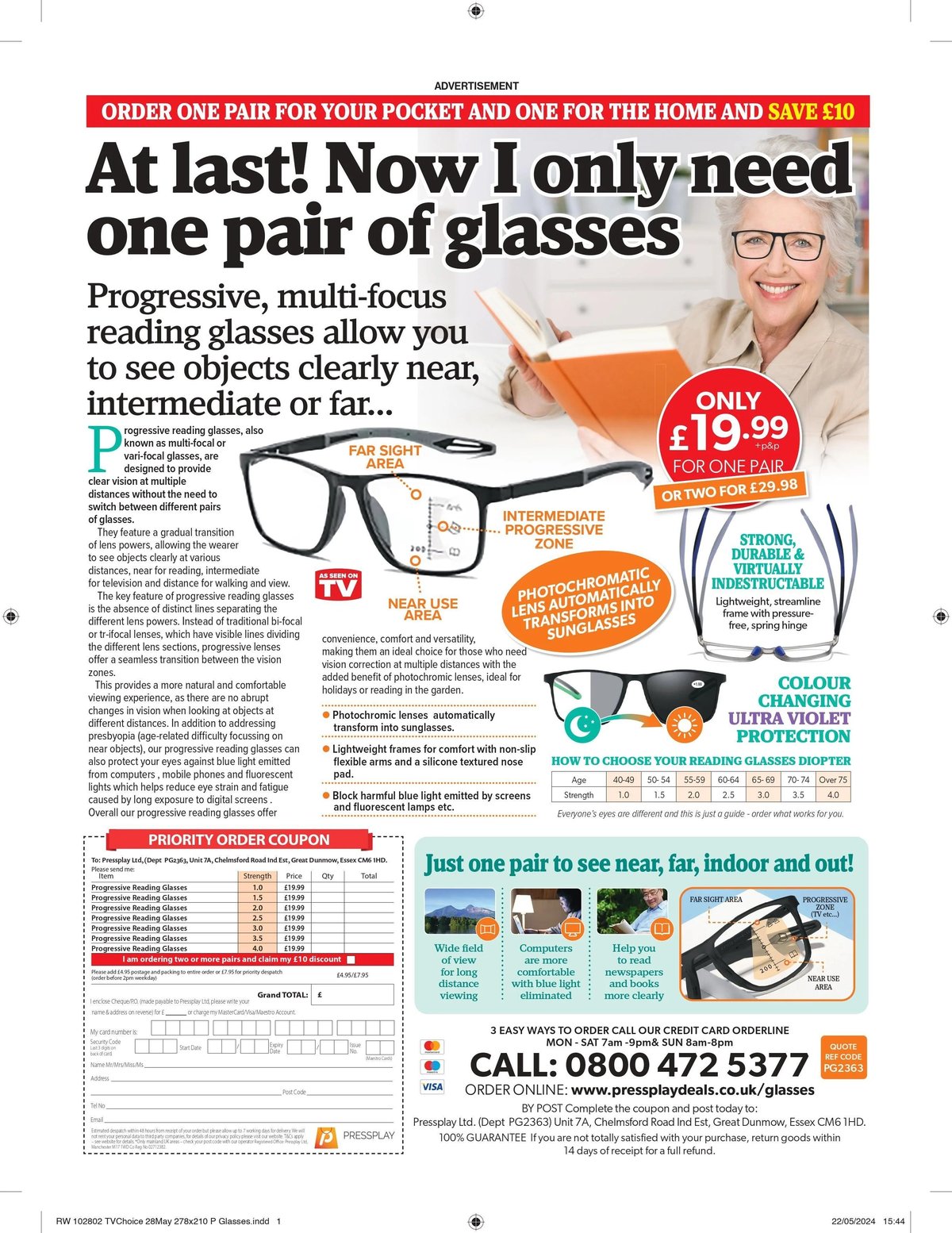
Imagine a lens that's like a finely tuned gradient, a masterpiece of optical engineering that flows seamlessly from one prescription to another. That's a progressive lens. Unlike their lined predecessors, progressive lenses boast an invisible corridor of changing power, allowing your eyes to transition smoothly through various focal lengths.
Here's a breakdown of how they work their magic:
- The Top Zone (Distance): This part of the lens is designed for seeing things far away – driving, watching TV, enjoying a landscape. It typically holds your distance prescription.
- The Middle Zone (Intermediate): Also known as the "progression corridor," this is the crucial sweet spot. As your eye moves downward from the distance zone, the prescription gradually increases, providing clear vision for objects at arm's length – think computer screens, dashboard instruments, or chatting across a table.
- The Bottom Zone (Near): This is your dedicated reading zone, offering the strongest magnification for close-up tasks like reading a book, texting on your phone, or intricate hobby work.
This continuous, smooth transition is the hallmark of progressive lenses. There are no sudden shifts, no visible lines, and no frustrating "image jump." Your vision feels more natural, more like it did before presbyopia started playing its tricks.
The Uninterrupted Vision Experience: Core Benefits of Progressive Reading Glasses
Now that we understand the mechanics, let's explore the tangible advantages that make progressive lenses a game-changer for so many.
One Pair to Rule Them All: Seamless Vision at Every Distance
This is arguably the most significant benefit: the ability to see clearly at virtually any distance with a single pair of glasses. No more frantic searches for your reading glasses when the phone rings, or fumbling for your distance glasses when you need to drive.
Consider a typical day:
- You wake up, look out the window (distance).
- Check your phone for messages (near).
- Head to the kitchen, scan the room, prepare breakfast (intermediate to near).
- Drive to work (distance, with glances at the dashboard – intermediate).
- Spend hours at your computer (intermediate).
- Read documents (near).
- Chat with colleagues (intermediate to distance).
- Go grocery shopping (all distances – reading labels, seeing fellow shoppers, driving home).
Without progressive lenses, each of these scenarios might demand a different pair of glasses, or at least a constant on-and-off dance with a single pair of readers. With progressives, you simply adjust your gaze, and the lens does the rest. It's a level of visual freedom that truly enhances daily living.
Elegance Meets Function: Style Without Compromise
Let's be honest, visible lines on your lenses can feel a bit old-fashioned. One of the immediate aesthetic benefits of progressive reading glasses is their sleek, modern appearance. Because the different focal zones are blended invisibly into the lens, no one else will ever know you’re wearing multi-focal glasses.
This means you can choose from virtually any frame style that suits your face and personality, without worrying about lines distracting from your look. It's about combining sophisticated vision correction with contemporary style, giving you confidence and a refined appearance whether you're in a boardroom or out with friends.
Reclaiming Your Day: Unparalleled Convenience
The sheer convenience offered by progressive lenses cannot be overstated. Imagine simplifying your daily routine by eliminating the need to:
- Carry multiple pairs of glasses in your bag or pockets.
- Constantly swap between reading glasses and distance glasses.
- Push readers down your nose to peek over them for distance vision (a common, albeit ineffective, habit).
- Misplace the "right" pair of glasses just when you need them most.
This reduction in mental load and physical action frees up your focus for more important things. Whether you're a busy professional, an active grandparent, or simply someone who appreciates efficiency, the grab-and-go simplicity of progressive lenses is a profound benefit. They become an extension of your natural vision, not an accessory you have to constantly manage.
A Softer Landing for Your Eyes: Reduced Strain and Fatigue
The jarring "image jump" associated with traditional bifocals forces your eyes to work harder, constantly readjusting to abrupt changes in prescription. This can lead to eye strain, headaches, and general visual fatigue, especially after prolonged use.
Progressive lenses, with their smooth, continuous gradient, allow your eyes to transition between focal points much more naturally and effortlessly. It's like a ramp versus a step – much easier on the eyes and brain. This seamless adjustment reduces the stress on your ocular muscles, preventing the common discomfort that can arise from switching between different prescriptions. You'll likely find yourself feeling more comfortable and energetic throughout the day, even after hours of demanding visual tasks like computer work or reading.
More Than Just Sight: Enhanced Natural Vision
Beyond simply correcting vision at multiple distances, progressive lenses offer a more holistic and natural visual experience. They are designed to mimic the way youthful eyes adjust focus, providing a broader field of view and better peripheral vision compared to the narrow "windows" of bifocals.
This means a more natural sense of depth perception and spatial awareness. You'll find yourself moving through your environment with greater ease and confidence, whether you're navigating stairs, driving in varied conditions, or participating in hobbies that require precise hand-eye coordination. It’s not just about seeing clearly; it’s about experiencing the world more fluidly and naturally.
Are They for You? Who Benefits Most from Progressive Lenses
Progressive lenses are an excellent solution for a broad spectrum of people, particularly those who:
- Are experiencing presbyopia: If you're over 40 and find yourself struggling with near vision, regardless of whether you've previously worn glasses for distance vision, progressives are designed for you.
- Require vision correction at multiple distances: This includes individuals who need correction for distance, intermediate (like computer screens), and near tasks.
- Lead active lifestyles: From sports enthusiasts to avid travelers, the convenience of a single pair of glasses for all activities is invaluable.
- Are professionals: If your job involves a mix of computer work, reading, meetings, and interacting with people at various distances, progressive lenses can significantly enhance your productivity and comfort. Think of architects, teachers, office workers, or anyone who transitions between tasks frequently.
- Value aesthetics and comfort: Those who prefer an eyewear solution that looks modern and feels natural, without the tell-tale lines of bifocals.
- Are tired of juggling multiple pairs: If the constant swapping, losing, or forgetting of glasses is a daily frustration, progressive lenses offer a liberating alternative.
Making the Switch: Navigating Your First Pair of Progressives
Embracing progressive lenses is a step towards unparalleled visual freedom, but it's also a process that involves a few considerations to ensure the best possible experience.
Finding the Right Fit: The Importance of a Custom Prescription
The foundation of successful progressive lens wear lies in a precise, up-to-date eye examination. Your optometrist will not only determine your exact prescriptions for distance, intermediate, and near vision but also take precise measurements unique to progressive lenses. These include:
- Pupillary Distance (PD): The distance between the centers of your pupils.
- Optical Center Height: Where your pupil aligns vertically within the lens of your chosen frame.
- Pantoscopic Tilt: The angle of your frames relative to your face.
- Wrap Angle: How much your frames curve around your face.
These measurements are critical because the "corridor" of clear vision in a progressive lens is custom-ground for your eyes and your chosen frame. A slight misalignment can make adaptation difficult or reduce the effectiveness of the lenses. Always ensure you get your progressive lenses from a reputable optical professional who takes these measurements meticulously.
Personalizing Your Progressives: Lifestyle and Lens Design Options
Not all progressive lenses are created equal. Just like cars, there are different models and features available. Your lifestyle and specific visual needs should guide your choice.
- Standard Progressives: The entry-level option, offering good multi-focal correction.
- Free-Form or Digital Progressives: These are the premium option, custom-made using advanced digital surfacing technology. They offer wider fields of view, less peripheral distortion, and superior clarity, especially for intermediate vision, making them ideal for heavy computer users.
- Short Corridor Progressives: Designed for smaller, trendier frames, these have a shorter transition zone, though this can sometimes mean a slightly narrower intermediate area.
- Specialty Progressives: Some progressives are optimized for specific activities, like office work (wider intermediate and near zones) or driving.
Discuss your daily activities, hobbies, and work environment with your eye care professional. Are you on a computer all day? Do you spend a lot of time outdoors? Do you read extensively? These details will help them recommend the best progressive lens design and any additional coatings (like anti-glare, scratch-resistant, or photochromic lenses that darken in sunlight) to enhance your experience.
A Gentle Adjustment: Tips for Adapting to Progressive Lenses
While progressive lenses offer immense benefits, there’s often a short adjustment period. Your brain needs time to learn how to navigate the different power zones. Here's what to expect and how to make the transition smoother:
- Wear Them Consistently: The best way to adapt is to wear your new glasses as much as possible, right from day one. Resist the urge to switch back to old glasses.
- Learn to Move Your Head, Not Just Your Eyes: Instead of simply moving your eyes up and down, you'll learn to point your nose at what you want to see. For reading, look down into the near zone. For the computer, look through the middle zone. For distance, look straight ahead through the top.
- Be Mindful of Peripheral Distortion: When you look to the sides, you might notice some slight blurriness or distortion. This is normal in the early stages and part of the lens design. Your brain will learn to ignore it over time.
- Use Caution on Stairs and Uneven Surfaces: The distortion in the lower periphery can initially make stairs appear warped. Take extra care, looking straight ahead or tilting your head slightly down to use the intermediate or near zone, especially when going down stairs.
- Patience is Key: Most people adapt within a few days to two weeks. Some may take a bit longer. If you're still struggling after two weeks, don't hesitate to contact your optometrist. They can check the fit, prescription, or even consider a different lens design.
Think of it like learning to ride a bike – initially wobbly, but soon second nature. The benefits far outweigh the initial learning curve.
Common Questions & Misconceptions About Progressive Lenses
Let’s clear up some common concerns and misunderstandings about progressive lenses:
Q: Do progressive lenses cause dizziness or nausea?
A: While some people experience temporary dizziness or a "swimming sensation" during the initial adjustment period, this usually subsides as your brain adapts. It's often related to the peripheral distortion or incorrect fitting. A proper fitting and consistent wear usually resolve this.
Q: Are progressive lenses much more expensive than regular glasses?
A: Progressive lenses typically cost more than single-vision lenses or basic bifocals due to their complex design and manufacturing process. However, consider it an investment in convenience, comfort, and comprehensive vision. When you factor in the cost of multiple pairs of glasses or the daily frustration they alleviate, many find the value of progressive lenses to be well worth it.
Q: Can I drive safely with progressive lenses?
A: Absolutely. The top portion of the lens is specifically designed for distance vision, providing clear sight for driving. The intermediate zone is perfect for your dashboard. Just remember to move your head to look through the appropriate zone, especially when checking side mirrors or blind spots.
Q: How long does it take to adapt to progressive lenses?
A: Adaptation time varies from person to person. Many adapt within a few days, while for others, it might take up to two weeks. Consistency is the most important factor; the more you wear them, the faster your brain learns.
Q: Are there different "grades" or types of progressive lenses?
A: Yes, definitely. As mentioned earlier, there are standard progressives, and then more advanced designs like free-form or digital progressives. These premium lenses offer wider fields of view, less distortion, and a more personalized fit, often leading to an easier adaptation and superior visual experience.
Q: Can anyone wear progressive lenses?
A: Most people with presbyopia are excellent candidates. However, individuals with certain eye conditions (like significant nystagmus or certain types of strabismus) or those who simply cannot adapt after a prolonged period might find them challenging. Your eye care professional can assess your suitability.
Your Next Step Towards Clearer Vision
The journey to clearer, more convenient vision begins with understanding your options. Progressive reading glasses offer a sophisticated, modern solution to the age-old problem of presbyopia, seamlessly blending multiple prescriptions into a single, elegant lens. They promise not just better sight, but a more effortless and enjoyable way to interact with the world around you.
If you find yourself constantly reaching for different pairs of glasses, struggling with the limitations of bifocals, or simply yearning for the visual freedom you once enjoyed, it's time to explore the benefits progressive lenses can bring. Your most crucial next step is to schedule a comprehensive eye examination with a qualified optometrist. They can assess your individual needs, determine the best prescription and lens design for your lifestyle, and guide you through the exciting process of discovering uninterrupted vision. Don't just adapt to your aging eyes; empower them.